


Let’s set the scene: in B2B you sell more than products. You sell confidence in a decision. That makes branding a growth lever, not a nice-to-have.
I’ll define what a modern brand strategy looks like for UK SMEs and show how it links directly to revenue, retention and pricing power over time. You’ll see how a brand becomes a system that guides daily execution across touchpoints.
Brand work starts with research and distinct features so people associate your company with the experience you promise. It goes beyond visuals: it is the cumulative assets and actions that shape perception among customers and partners.
We will map practical steps to build preference, not just awareness, even in crowded categories. I’ll show how to connect brand outcomes to pipeline quality, win rate and long-term value so your effort drives measurable growth.
What branding really means in B2B today
Think of your company as a promise that people experience, not just a logo on a page. I define branding as the ongoing process of creating and managing the assets and actions that shape what stakeholders believe about your firm.
Beyond logos: cumulative assets and actions
Your visual identity matters. So does tone of voice, pricing signals and how your team answers the phone. These repeated elements combine to form a single perception. I’ll show teams how small choices — words, design, service standards — create trust or erode it.
Brand as experience across touchpoints
Your website, proposals, onboarding and customer service are all part of the same system. Half of users judge a business by its site design, so inconsistent pages cause friction before sales speaks to a prospect.
Reputation forms whether you manage it or not
If you don’t steer these signals, the market will. Partners, employees and customers all shape reputation. Leave it to chance and you lose control of price, retention and recruitment.
Share this definition with your team: a brand is a system of assets and actions — not a one-off design exercise.
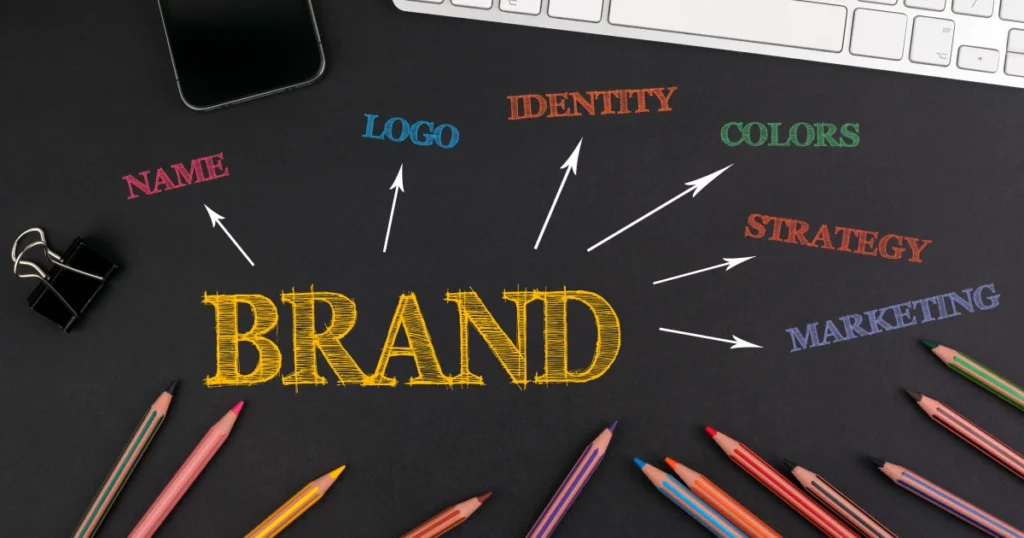
Brand strategy vs marketing strategy: how they work together
I’ll separate the long-term choices that shape identity from the short-term tactics that win attention. Brand strategy defines who you are, what you promise and the position you own. Marketing uses channels and campaigns to turn that promise into demand.
Identity versus tactics: where each discipline starts and ends
Brand work sets the rules—voice, positioning and visual identity. It creates a repeatable message architecture for the company.
Marketing plans the channels: paid media, content, email and outreach. These are the tactics that execute the strategy and generate leads.
How strong branding makes marketing more effective and consistent
When the brand is clear, marketing costs fall. People recognise your name. That recognition lifts click-throughs and conversions across content and ads.
I recommend one shared message map so sales and marketing use the same language. This process reduces wasted spend and speeds pipeline progress.
Why a strong brand drives long-term growth for B2B companies
In B2B sales the best differentiator is confidence — buyers choose suppliers who reduce risk fast. A strong brand shortens decision time by signalling reliability before a demo or proposal.
Trust and risk reduction in complex buying decisions
Buyers manage budgets and reputational risk. When a supplier feels familiar, the perceived risk falls.
Remember the stat: 71% of consumers say they are more likely to buy from brands they trust. In B2B that confidence translates into quicker approvals and higher win rates.
Creating memorability and preference in crowded industries
Being the company people recall makes you the default option. Clear messaging and consistent experience do that work.
Distinctiveness avoids price wars. Stand out with a simple narrative and consistent visuals rather than copying competitors.
Internal impact: employee pride, advocacy and culture fit
Employees who understand and back the brand act as ambassadors. That improves hiring, retention and day-to-day service.
Better culture lifts customer interactions. Happy employees create smoother onboarding and stronger referrals.
Business value: why brand equity becomes a tangible asset over time
Brand equity shows up as pricing power, higher lifetime value and steadier pipelines. Over time this adds measurable business value on the balance sheet.
Investing in a strong brand is an investment in growth, resilience and long-term value for companies that want to scale in the UK market.
Clarify your brand purpose, mission, and vision
Start with why your company exists and how that reason shows up in daily choices. Purpose anchors long-term growth so your business does not outpace its identity.
Defining the positive role you want to play for customers and communities
Pick a clear role you will play for customers and, where relevant, the wider community. Avoid vague statements. Say what you will do and who benefits.
Use real examples. Patagonia’s purpose — “Save our home planet” — guides trade-offs and actions. A sharp purpose helps technical firms act with the same clarity.
Writing a mission statement that guides decisions across departments
Write a mission that is usable. It should help marketing, sales, operations and hiring make quick, aligned calls.
Test it: if the mission cannot guide a hard trade-off, rewrite it. A good mission maps to outcomes, not slogans.
Turning values into non-negotiables that scale with your company
Convert values into rules teams follow every day. Make them non-negotiables so people can apply them under pressure.
Document the values and tie them to behaviours, hiring criteria and performance reviews. This protects the brand as the business grows and the audience widens.
Know your target audience and buying committee inside out
Start by mapping who signs the checks, who advises them, and who uses your service day-to-day. That map changes how you speak and where you invest time.
I build B2B personas that reflect real stakeholders, not just job titles. Each persona lists pain points, decision criteria, risk triggers and success metrics. This makes your message land with the right people.
Personalisation expectations and what they mean for your positioning
With 70% of people expecting personalised experiences, your brand must feel relevant. Personalisation should tighten positioning, not fragment it. Use consistent proof points so customers see the same promise across touchpoints.
Mapping stakeholder perceptions
Prospects, customers, employees and partners often view your company differently. Map these perceptions. Look for gaps between what you say and what people feel. Those gaps reveal trust issues and quick wins.
Practical research methods you can run this month
Use short interviews, win-loss reviews, sales-team debriefs and light social media listening. Track repeated language and emotional drivers. Then turn findings into a simple research plan your team can apply to brand decisions.
Define your positioning and differentiation against competitors
Choose one clear position and use it to steer every customer conversation. I recommend naming the category or niche you will own. Then pick a simple narrative or point of view that your team repeats.
What you can own: category, niche, narrative, or point of view
Own a narrow space and defend it. That focus makes you memorable and easier to explain to buyers.
Value proposition versus features: articulating outcomes and benefits
Lead with outcomes, not feature lists. Say what changes for customers and how success looks in measurable terms.
Competitor analysis that improves clarity rather than copying
Scan competitors to find open space. Use what you learn to clarify choices — do not imitate. Clear difference wins trust and price premium.